 مجلة الوعي العربي
مقدمة بقلم : د . كمال خلف الطويل
كينيث م. بولاك
31 يناير 2019
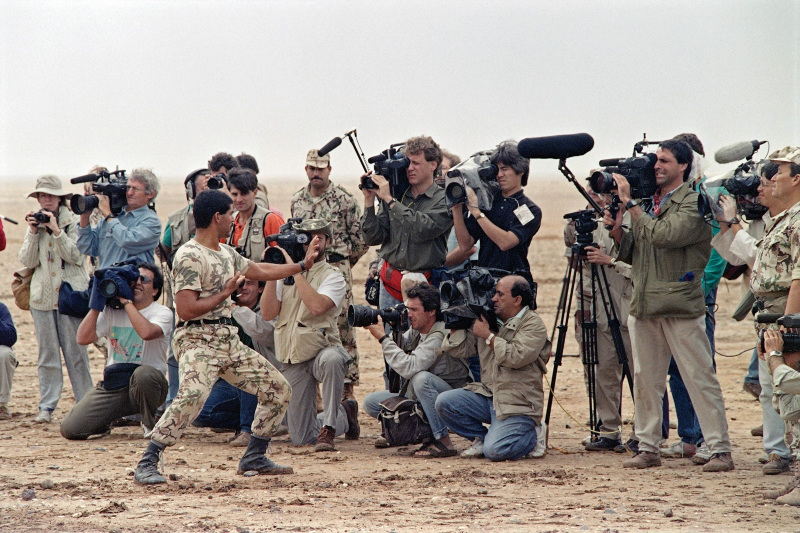
قوات الكوماندوز التابعة للجيش المصري بتدريبات قتالية مباشرة في معسكرهم في مكان ما في الصحراء السعودية في 27 نوفمبر 1990. (MIKE SARGENT / AFP / Getty Images)
لقد أمضت الولايات المتحدة 70 عامًا وعشرات الملايين من الدولارات في تدريب الجيوش العربية - مع عدم وجود أي شيء تقريباً لتوضيح هذا الجهد.
مراراً وتكراراً ، فشل حلفاء أميركا العرب في الوفاء بالتوقعات القتالية. لقد كانت القوات المسلحة المصرية التي تدربت على يد الولايات المتحدة في عام 1991 في حالة بائسة ، أثناء عملية عاصفة الصحراء. إذا كان هناك أي شيء ، فقد كان أداءهم بشكل أفضل في ظل الوصاية السوفيتية في حرب أكتوبر 1973.
وقد انهار الجيش العراقي الذي تدربه الولايات المتحدة عندما هاجمه ألفان من متحمسي الدولة الإسلامية في عام 2014.
وقد سقط الجيش السعودي الذي تدربه الولايات المتحدة على وجهه عندما تدخل في اليمن في عام 2015 ، وأصبح عالقا بشكل سيئ هناك.
إذا كانت الولايات المتحدة سوف تستمر في المشاركة في الشرق الأوسط ، فعليها أن تعيد التفكير في الطريقة التي تتعامل بها مع الجيوش العربية. يجب استبدال الأحلام الطموحة للجيوش الحاضرة والمحدثة بخطط أكثر واقعية تعتمد على نقاط القوة الحقيقية للحلفاء ، بدلاً من إجبار الجنود على التفكير في أن مجتمعاتهم وثقافاتهم قد تركتهم غير مناسبين بشكل كبير. وإلا فإن واشنطن سوف تستمر في ضخ الأموال في البالوعة - وحلفاؤها العرب سيواصلون الفشل.
هذا ليس محرجًا فقط. على مدى عقود ، كان التدريب العسكري الأميركي عنصراً حاسماً في التحالفات مع الحلفاء في الشرق الأوسط ، المصمم لإظهار الالتزام بأمنهم وإعطائهم القدرة على مساعدة أمريكا في حماية بلدانهم. في السنوات الأخيرة ، بدأ الأميركيون يتطلعون إلى الخروج من الشرق الأوسط ، لكن قلة منهم يريدون أن يبتعدوا عن بعضهم البعض ، وأن تتسلل إيران ، أو حزب الله ، أو الدولة الإسلامية ، أو القاعدة ، أو أعداء أمريكيون آخرون مع مغادرة الولايات المتحدة. في عالم مثالي ، سوف تخلف أميركا وراءها حلفاء عرب أقوياء ، قادرين على الدفاع عن أنفسهم من أعدائهم المشتركين. لكن يبدو هذا بعيدًا اليوم كما فعل عندما بدأت الولايات المتحدة بتدريب القوات المسلحة العربية في الخمسينات.
على الجانب الأمريكي ، كانت الجهود الرامية إلى تدريب الجيوش العربية مخلصة ومستمرة ومآلها الفشل. تحاول القوات الجوية الأمريكية تدريب القوات الجوية المصرية (EAF) لطيران F-16 لعقود من الزمن. ومع ذلك ، في القرن الحادي والعشرين ، دعا نمط الهجوم القياسي للقوات الجوية المصرية إلى طائرتين تقتربان تقريبًا من أي من جانبي الهدف ، في مسار تصادمي. وبالتالي ، حتى في التدريبات ، يجب على طائرة واحدة من كل زوج أن تنحرف في اللحظة الأخيرة لتجنب الاصطدام في الجو - مما يجعل قنابل الطيارين بعيدة عن الهدف.
لأن المصريين لا يسجلون مهماتهم أو استفسارتهم ، ناهيك عن انتقادهم لأدائهم ، ولا أحد على المستوى التشغيلي يريد أن يهز القارب بالإشارة إلى أن تكتيكاتهم انتحارية وتدريبهم مزور ، كل هذه الممارسات أصبحت عناصر مؤسسية لتدريب EAF ، وأبلغ الطيارون الأمريكيون عن إحباط دائم في محاولة إقناع EAF بأن حلول مدرستها ليست خاطئة فحسب ، بل قد تكون قاتلة. أخبرني أحد الطيارين الأمريكيين الذي تدرب مع القوات المسلحة أنه من “الجيد” أن المصريين لم يستخدموا الذخائر الحية في الواقع لأنهم إذا فعلوا ذلك ، فإنهم سيفقدون الكثير من طائراتهم وطياريهم لهذه التكتيكات السخيفة والمشوهة. ممارسات التدريب.
كان الطيارون المصريون والخطباء الذين شاركوا في ابتكار هذه الممارسة السخيفة أسرى لسلسلة من المشاكل التي طاردت الجيوش العربية في العصر الحديث والتي نمت من المجتمع العربي المعاصر نفسه.
إن العلاقات المدنية-العسكرية المشحونة في العالم العربي تعني أن العديد من الحكام العرب خائفون جداً من الإطاحة بالجنرالات الطموحين بأنهم يعمدون إلى عرقلة القوات المسلحة لإبقائهم ضعفاء. كلما حدث ذلك ، أدى ذلك عادة إلى ضعف القيادة الاستراتيجية والاتصالات ، وفي بعض الأحيان ، تدهور الروح المعنوية وتماسك الوحدة.
العالم العربي لم يسبق له مثيل في الصناعة ، وهذا التخلف النسبي يعني أن العديد من العرب جاءوا إلى الجيش دون فهم كبير للآلات المتقدمة. ونتيجة لذلك ، غالباً ما أخفق الأفراد العرب في الحصول على الإمكانات الكاملة من أسلحتهم وفشلوا في الحفاظ عليها بشكل صحيح ، مما أدى إلى أن العدد الحقيقي للدبابات والطائرات وقطع المدفعية التي يمكن أن يمدوها كان أقل بكثير مما كانوا يمتلكونه. تم شراؤها.
لكن العامل الأكثر أهمية هو أن الممارسات التربوية الثقافية العربية ترتبت الكثير من أفرادها ليظلوا سلبيين في مستويات أدنى من أي تسلسل هرمي ويتلاعبوا بالمعلومات لتجنب اللوم. في المعارك الحديثة - حيث الفرق بين النصر والهزيمة غالبًا ما يكون عدوانيًا ، ضباط صغار مبتكرين قادرين على الاستجابة لظروف غير متوقعة والاستفادة من الفرص العابرة - هذه الميول أثبتت أنها مدمرة مرارًا وتكرارًا.
يمكن لأجيال من الأفراد العسكريين الأمريكيين الذين ذهبوا إلى الشرق الأوسط في محاولة لتعليم جيش عربي أو آخر للقتال مثل القوات المسلحة الأمريكية أن يشهدوا على عناد هذه المشاكل. لقد عايشت شخصياً فترة إحباطهم ومرة أخرى ، في نطاقات تدريب من دلتا النيل إلى وديان نهر ما بين النهرين. ولأن المشاكل التي كانوا يحاولون إصلاحها ينبعون من هذه العوامل المجتمعية ، فقد سمعت نفس الشكاوى مراراً وتكراراً ، من بلد إلى آخر ومن عقد إلى آخر.
كان لدى الروس إحباطات متطابقة لأنهم واجهوا نفس القضايا المستمدة من المجتمع العربي الأوسع. على سبيل المثال ، في الفترة التي سبقت حرب أكتوبر ، اعتمد المصريون التكتيكات السوفييتية إلى حد أكبر من أي وقت مضى. في ذلك الوقت ، كانت العقيدة السوفيتية هو تعيين قائد فصيلة دبابة هدفًا واحدًا ، حيث يتم إطلاق الفصيل بأكمله (ثلاث دبابات ، بما في ذلك القائد) حتى يتم تدميره ، ثم يقوم القائد بتعيين هدف جديد. حسبت السوفييت أنه ، في ضوء مهارات المدفعية لطواقمها ، فإن الأمر يتطلب عادة ثلاث صفارات من الفصيلة (أو تسع طلقات) لقتل دبابة العدو. وبدلاً من رؤية هذا كدليل عام للتخطيط ، حوله المصريون إلى قاعدة صارمة وسريعة وعلّموا جميع فصائلهم للدبابات لإطلاق ثلاث قذائف على الهدف المحدد ثم الانتقال إلى الهدف التالي.
تبين أن مدفعية الدبابات المصرية كانت أفقر بكثير من الرماية السوفيتية ، ونتيجة لذلك ، خلال حرب أكتوبر ، كان في كثير من الأحيان أن أيا من الطلقات التي أطلقت في الصفوف الثلاث لفرقة دبابات مصرية أصابت الدبابة الإسرائيلية التي استهدفتها . ومع ذلك ، ولأن المصريين تلقوا تعليمًا لإطلاق ثلاث صفارات ثم الانتقال ، فإنهم سيحولون نيرانهم إلى الهدف التالي على الرغم من أنهم لم يدمروا أولاً الهدف الأول. وبهذه الطريقة ، قاد المصريون مستشاريهم الروس إلى إلهاء يحاولون إقناعهم بعدم اتخاذ إرشاداتهم كقوانين غير قابلة للكسر. كما كان أحد الأسباب الكثيرة التي جعلت المصريين يخسرون الكثير من مبارزات الدبابات للإسرائيليين في عام 1973.
على الرغم من هذا التاريخ من الفشل السوفياتي والأمريكي ، فقد كان من الممكن تحسين الأداء القتالي للجيوش العربية ، لكنه كان أيضاً صعباً للغاية. إنه يتطلب جهدا كبيرا من أجل تحسين هيكلة القوات نفسها والعمليات التي ستقوم بها ، وقد أثبت أنه من الصعب للغاية مساعدتهم على اكتساب أكثر من قدرات متواضعة ، حتى مع بذل الكثير من الجهد.
وكان أحد أكثر الأساليب نجاحًا هو إبقاء القوات صغيرة الحجم ، والحصول على فوائد الصفات والحفاظ على نسبة عالية بشكل غير معتاد من الجنود والضباط ذوي المهارات غير الثقافية.
إن ميزة الاعتماد على تشكيلات النخبة الصغيرة هي أنه - صحيح - يسمح للجيش باختيار أفضل الجنود والضباط من القوة الأوسع وتركيزهم حيث يمكن أن يكون لهم الأثر الأكبر. الميول الثقافية ليست سوى ميول ، ومتوسطات يتجمع حولها الأفراد ويفرقون. وبعبارة أخرى ، لا يوثق كل جندي أو ضابط عربي هذه الاتجاهات نفسها بنفس القدر. فكلما زادت قدرة أولئك الذين يتمتعون بالمهارات والقدرات الصحيحة من القوة الأوسع وتركيزهم في تكوينات النخبة ، كلما كان من المرجح أن تكون تلك التشكيلات الأكثر قدرة. هذا هو النهج الذي اتبعته الولايات المتحدة في العراق بعد عام 2014 ، حيث استثمر بكثافة في خدمات مكافحة الإرهاب الصغيرة (CTS) ، مما ساعد العراقيين على تحديد (ثم تدريب) أفضل الأشخاص ، ونقلهم إلى CTS ، و ثم استخدم تلك القوة لقيادة كل حرب عراقية رئيسية ضد الدولة الإسلامية.
لكن نهج النخبة محدود ويصعب الحفاظ عليه. قد يكون النهج البديل الذي قد تستخدمه الولايات المتحدة في ظروف أخرى هو تشجيع الجيوش العربية على التركيز على القيام بما يقومون به بشكل جيد وتجنب مناطق الحرب تلك التي تجعل القيود المشتقة اجتماعياً صعبة أو مستحيلة.
تقوم الجيوش العربية بعمليات هجومية مدروسة ومدرّبة جيداً أو عمليات دفاعية ثابتة ، غالباً ما تقاتل بشجاعة استثنائية. لكنهم يؤدون أداءً سيئًا في السوائل ، وحروب المناورة ؛ عمليات مخصصة حرب أسلحة مشتركة عمليات جوية-جو و جو-أرض (خاصة عندما لا يستطيعون الاعتماد على الذخائر الموجهة بدقة للقيام بمعظم العمل) ؛ وأي شيء يتطلب إدارة معلومات مرنة ودقيقة. هذه يجب أن تترك للقوات الغربية الأكثر قدرة.
استخدمت الولايات المتحدة هذا النهج إلى حد ما في الحرب ضد الدولة الإسلامية أيضًا ، معتمدة على القوة الجوية للتحالف والقوات الخاصة للقيام بأكبر قدر ممكن من الاستكشاف والقتل لتقليل المطالب على قوات الأمن العراقية. إلا أن أفضل مثال على ذلك هو الطريقة التي حاولت بها الولايات المتحدة بناء العمليات العربية كجزء من عملية عاصفة الصحراء. هناك ، كانت تشكيلات الجيش الأمريكي والبحرية القادرة مسؤولة عن الهجوم التحويلي الرئيسي في الكويت والمناورة العظيمة (“الخطاف الأيسر”) ، بينما طلب من الحلفاء العرب فقط تغطية أجنحة الاعتداءات الأمريكية.
أين ومتى كان ذلك ممكنا ، هناك طرق أخرى لتحقيق ذلك. إلى الحد الذي تستطيع فيه الولايات المتحدة التأثير على ترقيات الضباط وتفويضات القيادة ، كما فعلت في العراق في الأعوام 2006-2010 و 2014-2017 ، يمكن أن يساعد ذلك على تقليل تأثير التسييس وتمكين القادة الذين لديهم مهارات ضرورية للغاية ولكن غير ثقافية .
وعلى مستوى أعمق وأكثر صعوبة ، كلما زادت قدرة الولايات المتحدة على التأثير في تعليم الجنود والضباط العرب في المستقبل من العصور المبكرة ، كلما زاد احتمال وجود أعداد أكبر من الأشخاص الذين يتمتعون بالمهارات المناسبة. لا أحد يولد مع الميول الثقافية. الثقافة هي السلوك المعرف ، وكلما تغيّرت العمليات التعليمية العربية من التركيز الاستبدادي على الحفظ والاستظهار على نحو روتيني (بدلاً من خلقه) ، كلما زاد إنتاج الرجال والنساء بمهارات البقاء والازدهار في ساحة المعركة الحديثة .
فشل الولايات المتحدة في تحسين الجيوش العربية لم يكن فريدا أو خطأ أمريكا. لكن كان يجب على الولايات المتحدة أن تتعلم منذ فترة طويلة أن محاولة جعل القوات العربية نسخة كربونية من جنود المارينز لن تنجح.
وبدلاً من أن يحاول الأمريكيون إجبار الأفراد العسكريين العرب على القيام بالأمور بطريقتهم ، عليهم أن يبحثوا عن طرق لمساعدتهم على القيام بما يقومون به بشكل أفضل. لن يصلوا إلى مستوى فعالية الولايات المتحدة بهذه الطريقة ، ولكن مرة أخرى ، فإن محاولة إجبارهم على التفكير والتصرف مثل الأمريكيين لم تنجح حتى الآن وربما لن يفعلوا ذلك.
وعلى المدى الطويل ، قد تكون الصورة مختلفة جدًا. يتغير المجتمع العربي بشكل دراماتيكي - سياسيًا واقتصاديًا وثقافيًا - كما شهدته موجة الثورات في عام 2011. كذلك ، هي الحرب. يوما ما ، قد يكون المجتمع العربي الجديد منسجمًا بشكل أفضل مع أي مطالب من حروب المستقبل. عندما يحدث ذلك ، ربما لن يحتاج الأميركيون لتدريب جيوشهم. الجحيم ، ربما سيراقبون أمريكا.
كينيث بولاك هو باحث مقيم في معهد أميركان إنتربرايز ومؤلف كتاب جيوش جديد من الرمل: الماضي والحاضر ومستقبل الفعالية العسكرية العربية.
_____________________________________________________________________________________________
المقال من المصدر
The U.S. Has Wasted Billions of Dollars on Failed Arab Armies
<img src=”https://foreignpolicymag.files.wordpress.com/2019/01/gettyimages-1017698712.jpg?w=800&h=533&crop=0,0,0,0” alt=”Egyptian army commandos go through a hand-to-hand combat drill at their camp somewhere in the Saudi desert on Nov. 27, 1990. (MIKE SARGENT/AFP/Getty Images)” class=”image -fit-3-2″>Egyptian army commandos go through a hand-to-hand combat drill at their camp somewhere in the Saudi desert on Nov. 27, 1990. (MIKE SARGENT/AFP/Getty Images)
The United States has spent 70 years and tens of billions of dollars training Arab militaries—with almost nothing to show for all the effort.
Time and again, America’s Arab allies have failed to live up to martial expectations.… The U.S.-trained Egyptian Armed Forces performed miserably in 1991 during Operation Desert Storm. If anything, they did somewhat better under Soviet tutelage in the 1973 October War.
The U.S.-trained Iraqi Army collapsed when attacked by a couple thousand Islamic State zealots in 2014.
The U.S.-trained Saudi military fell flat on its face when it intervened in Yemen in 2015, and it has become badly stuck there.
If the United States is going to stay involved in the Middle East, it has to rethink the way it engages with Arab militaries. Ambitious dreams of engaged, modernized militaries must be replaced with more realistic plans that build on the real strengths of allies, instead of forcing soldiers into a mold that their societies and culture have left them grossly unsuited for. Otherwise Washington will keep pouring money down the drain—and its Arab allies will keep failing.
This is not just embarrassing. For decades, U.S. military training was a critical element of alliances with allies in the Middle East, designed to demonstrate commitment to their security and give them the ability to help America protect their countries. In recent years, Americans have begun to eye an exit from the Middle East, but few want to walk away and have Iran, Hezbollah, the Islamic State, al Qaeda, or other U.S. enemies take over as the United States departs. In an ideal world, America would leave behind strong Arab allies, able to defend themselves from their common foes. But that seems as far away today as it did when the United States first started training Arab armed forces back in the 1950s.
On the U.S. side, the effort to train Arab militaries has been sincere, persistent, and doomed. The U.S. Air Force has been trying to train the Egyptian Air Force (EAF) to fly the F-16 for decades. However, well into the 21st century, the EAF’s standard pattern of attack has called for two planes to approach nearly simultaneously from either side of a target, on a collision course. Consequently, even in training exercises, one plane out of every pair has to swerve at the last minute to avoid a midair collision—causing that pilot’s bombs to go far from the target.
Because the Egyptians don’t record their missions or debrief, let alone actually critique their own performances, and no one at operational levels wants to rock the boat by pointing out that their tactics are suicidal and their training rigged, all of these practices have become institutionalized elements of EAF training, and U.S. pilots have reported constant frustration trying to convince the EAF that its school solutions are not only wrong but potentially fatal. One American pilot who had trained with the EAF told me that it was “probably good” that the Egyptians didn’t use live ordnance in practice because if they did, they would lose a lot of their aircraft and pilots to these ridiculous tactics and distorted training practices.
The Egyptian pilots and tacticians involved in devising this absurd practice were prisoners of a series of problems that have haunted Arab armies throughout the modern era and that have grown out of contemporary Arab society itself.
The fraught civil-military relations of the Arab world mean that many Arab rulers are so frightened of being overthrown by ambitious generals that they purposely hobble the armed forces to keep them weak. Whenever that has happened, it has typically led to poor strategic leadership and communications and, on occasion, poor morale and unit cohesion.
The Arab world never really industrialized, and this relative underdevelopment meant that many Arabs came to the military without much understanding of advanced machinery. As a result, Arab personnel often failed to get the full potential out of their weapons and invariably failed to maintain them properly, with the result that the real numbers of tanks, planes, and artillery pieces they could field were far fewer than what they had purchased.
But the most critical factor is that Arab cultural-educational practices conditioned too many of their personnel to remain passive at lower levels of any hierarchy and to manipulate information to avoid blame. In modern combat—where the difference between victory and defeat is often aggressive, innovative junior officers able to react to unforeseen circumstances and take advantage of fleeting opportunities—these tendencies proved devastating time and again.
Generations of U.S. military personnel who went off to the Middle East to try to teach one or another Arab army to fight like the U.S. armed forces can attest to the stubbornness of these problems. I personally experienced their frustration time and again, on training ranges from the Nile Delta to the Mesopotamian river valleys. And because the problems they were trying to supposedly fix stemmed from these societal factors, I heard the same complaints over and over again, from country to country and decade to decade.
The Russians had identical frustrations because they faced the same issues derived from the wider Arab society. For instance, in the run-up to the October War, the Egyptians adopted Soviet tactics to a greater extent than ever before. At that time, Soviet doctrine was to have the commander of a tank platoon designate a single target, at which the entire platoon (three tanks, including the commander’s) would fire until it was destroyed, and then the commander would designate a new target. The Soviets calculated that, given the gunnery skills of their crews, it normally would take three salvos from the platoon (or nine shots) to kill an enemy tank. Rather than see this as a general guide for planning, the Egyptians turned it into a hard-and-fast rule and taught all of their tank platoons to fire three salvos at the designated target and then move on to the next target.
Egyptian tank gunnery turned out to be considerably poorer than Soviet marksmanship, and as a result, during the October War, it was often the case that none of the shots fired in the three salvos of an Egyptian tank platoon hit the Israeli tank it had targeted. Nevertheless, because the Egyptians had been taught to fire three salvos and then move on, they would shift their fire to the next target even though they had not actually destroyed the first one. In this way, the Egyptians drove their Russian advisors to distraction trying to convince them not to take their guidelines as unbreakable laws. It was also one of the many reasons that the Egyptians lost so many tank duels to the Israelis in 1973.
Despite this history of both Soviet and U.S. failure, it has been possible to improve the combat performance of Arab militaries, but it has also been very difficult. It requires considerable effort to better structure the forces themselves and the operations they will undertake and has proved exceptionally hard to help them acquire more than modest capabilities, even with enormous exertions.
One of the most successful approaches has been to keep the forces trained small, gaining the benefits of eliteness and maintaining an unusually high proportion of soldiers and officers with non-culturally regular skills.
The advantage of relying on small, elite formations is that—done right—it allows an army to pick the best troops and officers from the wider force and concentrate them where they can have the greatest impact. Cultural proclivities are nothing but tendencies, averages around which individuals cluster and diverge. In other words, not every Arab soldier or officer evinces these same tendencies to the same extent. The more that those with the right skills and abilities from the wider force can be picked out and concentrated in elite formations, the more capable those formations are likely to be. This is effectively the approach that the United States took in Iraq after 2014, investing heavily in its small, elite Counter Terrorism Service (CTS), helping the Iraqis to identify (and then train) their best people, move them into the CTS, and then use that force to spearhead every major Iraqi fight against the Islamic State.
But the elite approach is limited and hard to sustain. An alternative approach that the United States might employ in other circumstances would be to encourage Arab militaries to focus on doing what they do well and avoid those areas of warfare that societally derived limitations render difficult or impossible.
Arab armies perform well-scripted and rehearsed set-piece offensives or static defensive operations, often fighting with exceptional bravery. But they perform poorly at fluid, maneuver warfare; ad hoc operations; combined arms warfare; air-to-air and air-to-ground operations (especially when they can’t count on precision-guided munitions to do most of the work); and anything that requires flexible, accurate information management. These need to be left to more capable Western forces.
The United States employed this approach to some extent in the war against the Islamic State too, relying on coalition air power and special forces to do as much of the scouting and killing as possible to minimize the demands on the Iraqi security forces. A better example, however, would be the way that the United States tried to structure Arab operations as part of Operation Desert Storm. There, capable U.S. Army and Marine formations were responsible for the main diversionary attack into Kuwait and the great enveloping maneuver (the “left hook”), while Arab allies were asked only to cover the flanks of the U.S. assaults.
Where and when it is possible, there are other ways to achieve this. To the extent that the United States can influence officer promotions and command assignments, as it did in Iraq in 2006-2010 and 2014-2017, that can help diminish the impact of politicization and empower commanders with much-needed but non-culturally regular skills.
At an even deeper and harder level, the more that the United States can do to affect the education of future Arab soldiers and officers from the earliest ages, the more likely that there will be larger numbers of those with the right skills available. No one is born with cultural proclivities. Culture is learned behavior, and the more that Arab educational processes change from the autocratic emphasis on rote memorization and consumption of knowledge (rather than its creation), the more they will produce men and women with the skills to survive and thrive on the modern battlefield.
The U.S. failure to improve Arab militaries wasn’t unique or America’s fault. But the United States should have learned long ago that attempting to make Arab forces a carbon copy of the Marines wasn’t going to work.
Instead of Americans trying to force Arab military personnel to do things their way, they should look for ways to help them do what they do somewhat better. They won’t get to U.S. levels of effectiveness that way, but then again, trying to force them to think and act like Americans has not succeeded so far either and probably never will.
And in the long run, the picture may be very different. Arab society is changing dramatically—politically, economically, and culturally—as witnessed by the wave of revolts in 2011. So, too, is warfare. Someday, a new Arab society may be better attuned to whatever the demands are of the wars of the future. When that happens, maybe Americans won’t need to train their armies. Hell, maybe they will be training America’s.
Kenneth M. Pollack is a resident scholar at the American Enterprise Institute and the author of the new book Armies of Sand: The Past, Present, and Future of Arab Military Effectiveness.
